
Link: https://themalaysianreserve.com/2026/10/05/sarawak-target-tech-skills-gap-with-specialist-training/
By AUFA MARDHIAH
SARAWAK is expanding its talent pipeline for artificial intelligence (AI), semiconductors and aerospace as these industries demand increasingly specialised skills.
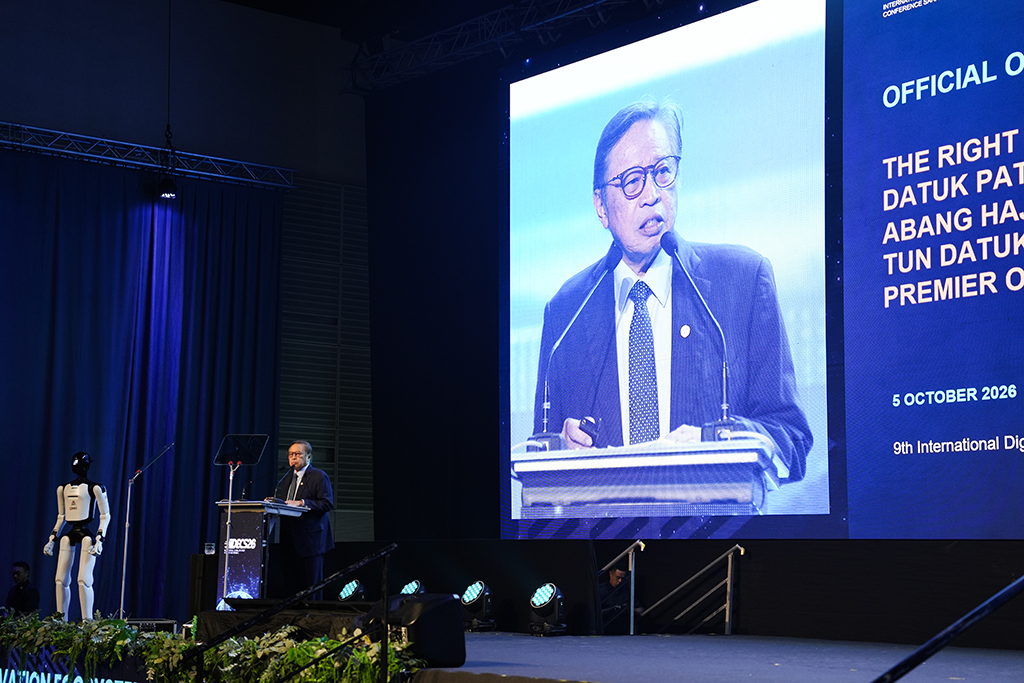
Premier Datuk Patinggi Tan Sri Abang Johari Tun Openg said technology development must be matched by efforts to build local expertise for emerging industries.
The state’s Free Tertiary Education Scheme, which commenced this year, covers 64 bachelor’s degree programmes, providing another route to prepare Sarawakians for these sectors.
“At the same time, the skills required are becoming increasingly specialised. Artificial intelligence requires expertise not only in computing and data, but also in the industries where AI is being applied,” he said in his keynote address at the International Digital Economy Conference Sarawak (IDECS) 2026 today.
Meanwhile, the semiconductor sector requires engineers and designers with specialised capabilities, including integrated circuit design, while aerospace draws on engineering, electronics and communications expertise.
To develop these skills locally, programmes involving SMD Semiconductor and the Centre for Technology Excellence Sarawak (CENTEXS) are building expertise in digital integrated circuit design.
The Aerospace Academy at CENTEXS Lundu, launched in 2024, is also expanding talent development beyond aviation into the broader aerospace sector, including space-related fields.
Abang Johari said closer links between education, training and industry would be needed to translate these skills into career opportunities.
“The stronger the connection between education, training and industry, the more opportunities we can create for our young people to translate their knowledge and skills into meaningful careers and contribute to the industries of the future,” he said.
Beyond technical qualifications, Sarawak also needs people who can think critically, adapt to technological change and solve problems as industries evolve.
Universities and research institutions will also have a role in moving research towards application and commercialisation, while industry provides opportunities for ideas to be tested and scaled.
International partnerships could further accelerate the development of expertise that is not yet available locally.
But Abang Johari said such collaborations should also strengthen Sarawakian talent, businesses, research institutions and supply chains.
“We want investment and collaboration to create stronger links with Sarawakian talent, local businesses, research institutions and supply chains, so that the benefits extend beyond immediate economic activity and contribute to our development over the longer term,” he said.
The talent push forms part of Sarawak’s wider efforts to build capabilities across AI, semiconductor innovation and the emerging aerospace and space economy.